A Wilderness Land Scam That Paid Off 50 Years Later — A Title Deed Found During Estate Clearance and the Irony of a Semiconductor Boom
What You Will Learn
Q. What is a "wilderness land scam" (gennya shōhō)?
Q. Is land bought through a wilderness scam worth anything today?
Q. What should I do if I inherited land from a wilderness scam?
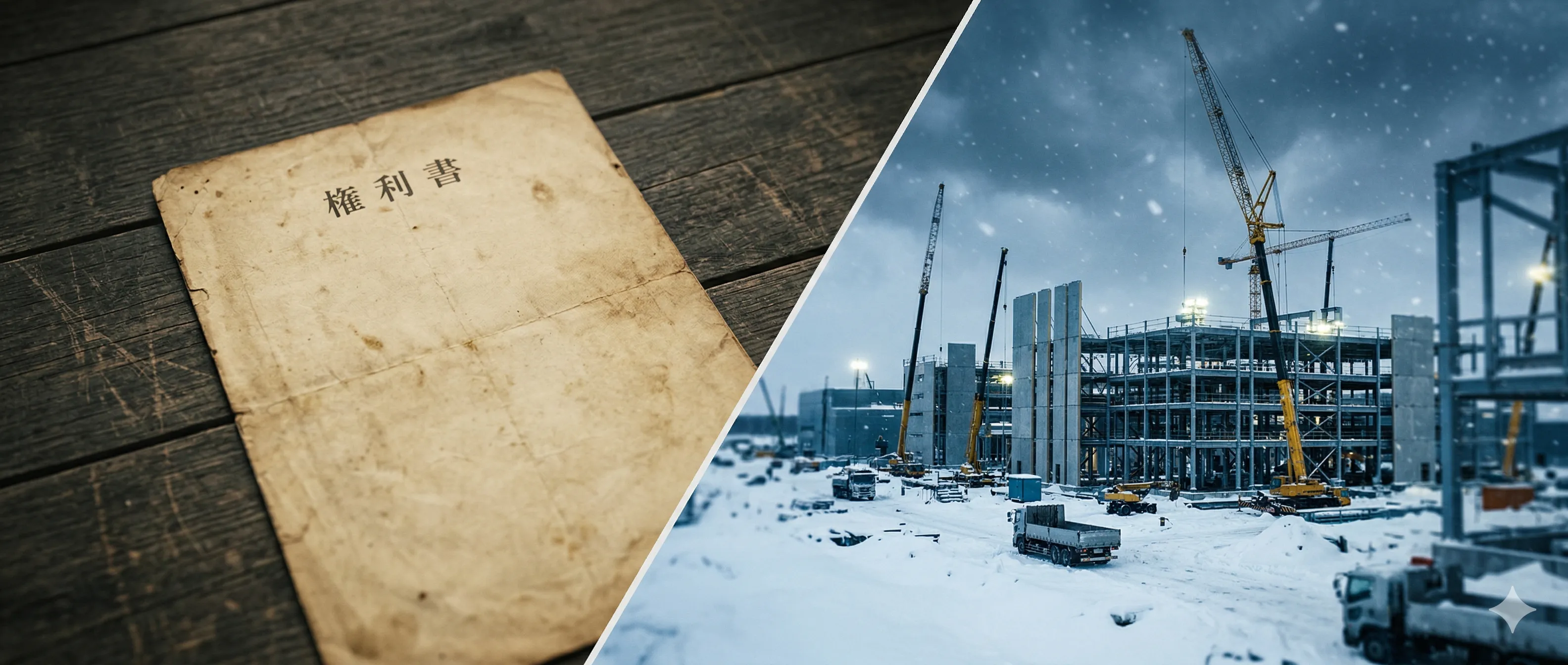
A Title Deed Among the Belongings
An acquaintance’s uncle passed away. He had been living alone in Sapporo. Never married. It was the dead of winter.
His only sibling — a younger brother — went in to sort through the belongings. That’s when he found an old title deed.
The name on it was the uncle’s father — my acquaintance’s grandfather. Land in Hokkaido. A sizeable plot.
“Ah, that.”
The family had talked about it for decades. Grandfather had been swindled into buying land years ago. A wilderness land scam — gennya shōhō, as it’s known in Japanese. Worthless wilderness sold at an outrageous price. The family had laughed it off as “the time grandpa got ripped off” and left it alone for half a century.
Then they looked up where the land actually was.
It was near the area with the fastest-rising land prices in all of Japan.
What Was the Wilderness Land Scam?
In the late 1960s and 1970s, Japan was gripped by a land speculation frenzy, driven by Prime Minister Tanaka’s “Remodeling the Japanese Archipelago” plan. Con artists rode the wave with a particular brand of real estate fraud that came to be known as wilderness land scams.
The pitch went like this:
“A highway is coming through nearby.” “A resort development has already been approved.” “This land will multiply in value within a few years.”
They sold mountain forests and open wilderness across Hokkaido for total prices ranging from several hundred thousand to about two million yen — serious money for a salaryman in those days. But when someone tells you “guaranteed returns,” plenty of people want to believe.
Hokkaido was the epicenter. The island offered vast stretches of undeveloped land, and it was nearly impossible for buyers on the main island of Honshu to visit in person. The worst operators would take clients on “site visits” and show them someone else’s land entirely. Complaints poured into Japan’s National Consumer Affairs Center from victims across the country.
My acquaintance’s grandfather was one of them. He was likely sold a thousand tsubo (about 3,300 square meters) or more — selling large plots was standard practice. The bigger the parcel, the higher the total price. “With this much land, imagine what it’ll be worth once development starts.”
Development, of course, never came.
Fifty Years Later — The Fastest Land Price Growth in Japan
The land grandfather had cursed as a rip-off. The land the family had joked about for decades. That very area had transformed into one of Japan’s most watched real estate markets.
In 2022, next-generation semiconductor manufacturer Rapidus announced it would build a factory in Chitose, Hokkaido. Toyota, Sony, NTT, and other major Japanese corporations invested, and the government committed several hundred billion yen in support. It’s a national-scale project aiming to mass-produce cutting-edge 2nm semiconductors. By spring 2025, the pilot production line was up and running.
The impact on land prices has been dramatic.
In the 2026 official land price survey, Chitose recorded the highest commercial land price growth rate in Japan. One location in Chiyoda-chō saw a year-over-year increase of +44.12%. Both residential and commercial land have risen for eight to nine consecutive years. Factory-related workers are flooding in, rental properties are in short supply, and demand has spilled into surrounding municipalities.
The numbers only tell part of the story. I visited Chitose at the end of last year, and the town had visibly changed. Hotels are going up everywhere. Restaurants from Sapporo’s entertainment district Susukino are opening satellite locations. A high-end sushi restaurant in town was packed. A single semiconductor factory can transform the entire atmosphere of a city. That’s how big the impact is.
My acquaintance’s grandfather’s scam land was located near that Rapidus factory.
To be clear, not all wilderness scam land has appreciated. The vast majority remains worthless wilderness half a century later. But the area near Chitose is different. Semiconductor-related companies are arriving one after another, industrial park expansions are under discussion, and urbanization zone boundaries are being reconsidered. Land that was “wilderness” is finding it harder to stay “wilderness.”
The land they wrote off as a scam might have actually paid off.
But They Can’t Do Anything
If the story ended here, it would be a satisfying comeback tale. Reality, however, isn’t that generous.
The land is still registered in the grandfather’s name.
Grandfather has been dead for years. The uncle is now dead too. To sell the land, to develop it, to do anything at all — inheritance registration must be completed first. Not a single step can be taken otherwise.
Two stages of inheritance transfer are needed: from grandfather to uncle, and from uncle to the younger brother. The uncle was unmarried with no children. Both parents are gone. The sole heir is the younger brother. That much, at least, is a stroke of luck — compared to cases where dozens of heirs are scattered across the family tree, this is manageable.
But the grandfather’s generation is the real headache. How many children did he have? If any of them have since died, their children inherit by right of representation. Just identifying all the heirs requires collecting cancelled residence records and family registers one by one.
Inheritance registration became mandatory in April 2024. Failure to register within three years without justifiable reason now carries fines of up to ¥100,000. The problem that could be indefinitely postponed with “it’s too much hassle” can no longer be dodged.
Victims of the wilderness scam were cheated once when they bought the land. Half a century later, unregistered inheritance confronts them — or rather, their descendants — with the problem all over again.
Watch Out for “Secondary Scams”
There’s another danger worth mentioning: secondary wilderness scam fraud.
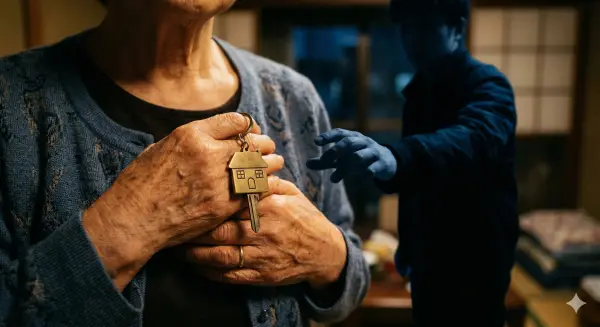
In recent years, a wave of scammers has targeted elderly people who originally bought wilderness land, contacting them with offers like “We’ll buy your land at a great price.” Once the victim is interested, the demands start: “We need surveying fees first.” “Site preparation costs.” “Processing charges.” The land never gets sold.
According to Japan’s National Consumer Affairs Center, complaints about secondary wilderness scams continue to pour in. Most victims are in their 70s and 80s. Increasingly, scammers are also targeting the children who inherited the land from their parents.
With news spreading about the Rapidus-driven land price surge near Chitose, pitches like “your land has gone up in value too” become all the more convincing — and all the more dangerous.
If someone calls offering to buy your land at a premium, be skeptical.
If the land were truly valuable, a stranger wouldn’t be cold-calling to buy it.
Five Social Issues in One Case
Looking back at this case, you realize it condenses several of modern Japan’s social challenges into a single story.
Solitary death — the growing number of elderly people living alone. The uncle died by himself in Sapporo, in the middle of winter.
Estate clearance — it’s only after death that the full picture of someone’s assets comes to light. If things had been sorted while the uncle was alive, the response could have come much sooner.
Wilderness land scams — the aftermath of Showa-era real estate fraud, still unresolved decades into the Reiwa period.
Unregistered inheritance — registrations postponed because “it’s too much trouble” or “the land is worthless.” Even with mandatory registration now in effect, an enormous amount of unregistered land lies dormant across Japan.
Regional land value swings — a national-priority semiconductor project arrives and overnight transforms property values. Land that was “worthless” for fifty years suddenly matters.
These aren’t separate problems. Starting from one person’s death and one title deed, they’re all connected.
Closing — “Worthless” Doesn’t Last Forever
Some people laugh at wilderness scam victims. “Why would anyone buy that?”
But who could have predicted that Rapidus would come along half a century later?
Real estate values shift across time. What’s worthless today may not be worthless tomorrow. The reverse is equally true — plenty of people bought central Tokyo condos during the bubble, convinced they’d always appreciate, only to find themselves underwater on their loans thirty years later.
That’s exactly why keeping records matters in real estate.
Maintain your registrations. Don’t neglect inheritance procedures. Keep ownership rights clear. That’s the only preparation that lets you act quickly when unexpected value emerges — or when unexpected problems arise.
Whether the land my acquaintance’s grandfather bought truly holds value remains to be seen. Zoning classification, road access, land category, surrounding infrastructure plans — there’s a mountain of things to investigate.
But one thing is certain: nothing can begin while the title is still in grandfather’s name.
This article is based on a real case with names, locations, and certain details altered. Please be alert to secondary wilderness land scams. If you receive a suspicious solicitation, contact your local consumer affairs hotline (dial 188 in Japan).
This article is provided for general informational purposes only and does not constitute advice on any specific transaction or investment decision. For advice on your particular situation, please consult a qualified professional.